Managing the consequences of heat in the workplace: the importance of using the right metrics
NEWS
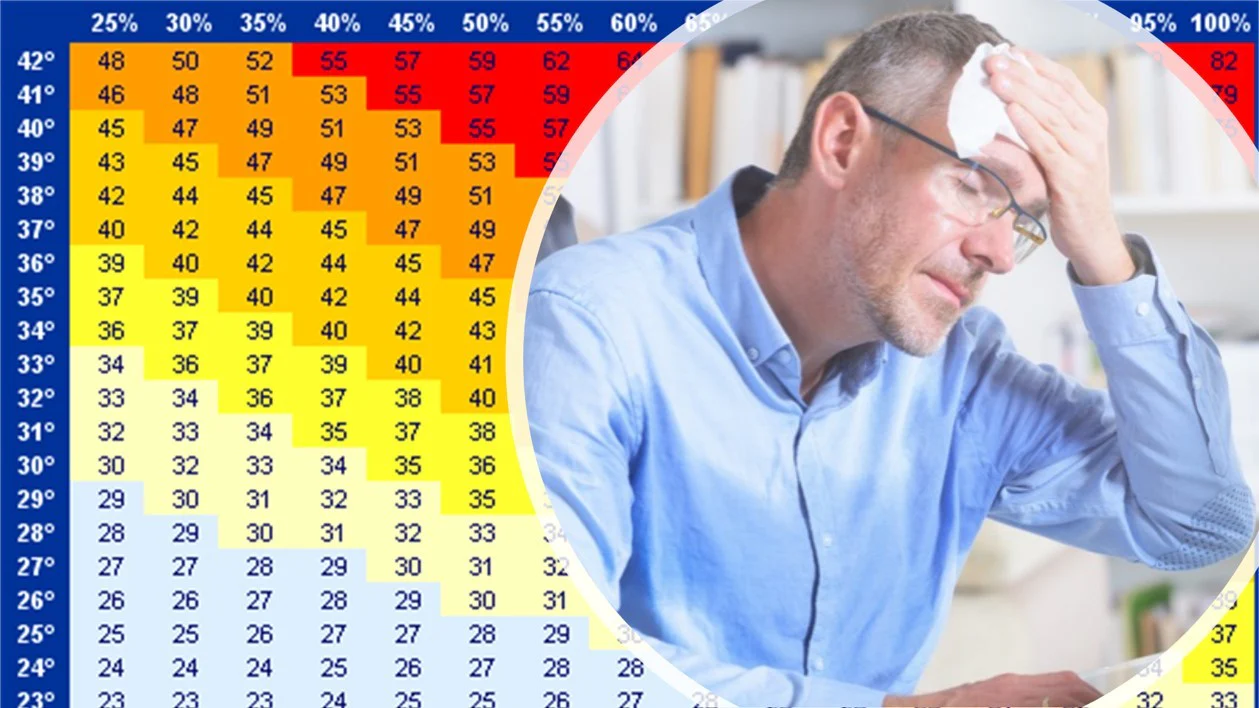
The perceived heat: a factor often underestimated
Last week, many of us experienced a lot of discomfort on terraces, in factories, offices, construction sites, and homes, to the point that any effort became laborious, even dangerous. Yet, the thermometer did not break any records. What happened? The humidity was abnormally high.
What truly impacts health, well-being, and safety at work is the perceived heat, a measurement that the simple thermometer alone cannot quantify. We need an index that takes into account the humidity level in the air, such as the Humidex, an index expressed in °C, combining air temperature and humidity level. Introduced for the first time in 1965, the current Humidex formula was developed in 1979 by the Canadian weather service.
Concrete Examples of Extreme Heat
For example, on July 30 at noon, near Tours, the temperature in the shade was 34.2°C with a humidity level of 69%, resulting in a Humidex (or perceived heat) of 49.5°C. Near Poitiers, with a temperature of 34.4°C, the Humidex reached 48°C. Early in the afternoon in Sarthe, the perceived temperature rose to 50.2°C, and a large part of northwestern France experienced perceived temperatures well above 40°C. The next day was just as unbearable, but on the third day, the situation began to improve.
The Impact of Heat on Productivity and Health
The impact of high temperatures on health is well documented, notably in the report on Work and Health-Environment: What Challenges to Address in the Face of Disruptions? or the report on Work and Climate: What Approach to Managing the Impact of Climate on Health at Work?
At work, productivity decreases as soon as the temperature exceeds 24°C and drops by half beyond 30°C. Additionally, heat causes fatigue, reduced alertness, drowsiness, and accidents.
The Humidex Risk Thresholds:
Below 29°C: Comfort Zone
30-34°C: Perceived Discomfort
35-39°C: Marked Discomfort
40-54°C: Serious Health Risk
Above 54°C: Deadly Danger
Anticipating Climate Challenges with the Climate Performance Diagnosis
This episode lasted only a few days, but it allowed everyone to assess its impact on their activity. With climate change, these episodes will multiply and intensify, not everywhere in the same way nor at the same speed.
The Climate Performance Diagnosis (CPD) from Tardigrade AI is a tool that provides each site with a set of risk metrics, historical and projected, for each climate peril. For the heat peril, the CPD offers many risk measures, from the Humidex to the number of hot days, through the heatwave index, or the evolution of cooling needs, so that every business, regardless of its sector, has actionable and relevant information to understand and anticipate.
Resilience Through Anticipation
Anticipation is key: the CPD allows decision-makers to access the year-by-year evolution of all climate risk metrics, following the GIEC's chosen greenhouse gas reduction scenario. Anticipation is the foundation of resilience, and the CPD is the best tool to build an adaptation strategy.
FAQ: Essential Questions about Heat in the Workplace
What is the Humidex and why is it more relevant than a simple temperature measurement?
The Humidex is an index that combines air temperature and humidity level to determine the heat actually felt by the human body. It is more relevant than a simple temperature measurement because our body is particularly sensitive to humidity, which affects our ability to regulate our internal temperature through sweating.
At what Humidex value should measures be taken in the company?
Preventive measures should be taken as soon as the Humidex exceeds 35°C (marked discomfort). Beyond 40°C, concrete actions must be implemented to protect the health of employees.
How will climate change affect heat episodes in the future?
With climate change, intense heat episodes will become more frequent, longer, and more intense. The particularity is that these changes will vary considerably by region, highlighting the importance of having localized projections.
What are the main consequences of excessive heat on productivity?
Productivity significantly decreases with heat: a 50% reduction beyond 30°C, an increase in errors, reduced concentration, slowing of cognitive and physical processes, and an increased risk of workplace accidents.
How can the Climate Performance Diagnosis (CPD) concretely help my business?
The CPD provides precise and localized data on the evolution of climate risks for your sites. For heat, it allows you to anticipate cooling needs, adapt work hours, plan investments in thermal insulation, and develop appropriate protocols to protect your employees.
Are there legal obligations concerning heat in the workplace?
In France, although there is no specific maximum legal temperature, employers have a general obligation to ensure the safety and protect the health of workers. Official recommendations are issued during heatwave episodes, and labor inspections can intervene if conditions are deemed dangerous.