How is work affected by climate change in France?
NEWS
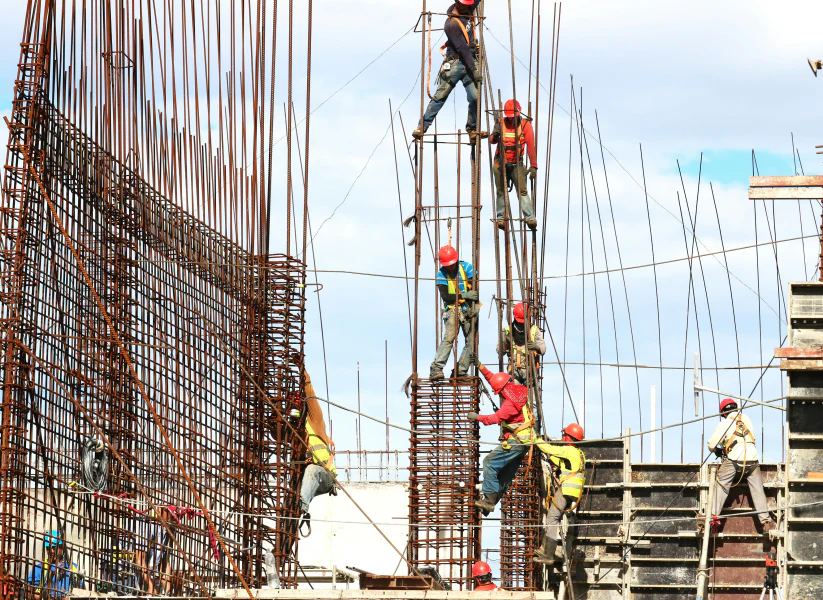
The Growing Exposure of French Workers to Extreme Temperatures
The latest Oxfam report, "Climate change, we are not ready," denounces the lack of anticipation by companies and elected officials regarding the consequences of heat on the world of work. This document is a continuation of the 2017 ANSES report that already warned about the increase in professional risks related to three major factors:
• The rise in temperatures
• The evolution of the biological and chemical environment
• The modification of the frequency and intensity of climatic hazards
The observation is clear: 36% of French workers are already exposed to temperatures exceeding 35°C in their workplace. This figure highlights the urgency to act to preserve the health of employees.
Which Workers Are Most Vulnerable?
Outdoor Workers
People working in sectors like agriculture, construction, or transportation are particularly exposed:
• To extreme temperatures (heat and cold)
• To the deterioration of air quality
• To disease-carrying pests whose spread is favored by climate change
Indoor Workers
Contrary to common belief, working indoors does not always provide sufficient protection:
• Many workers operate in inadequately ventilated or air-conditioned environments
• Poorly adapted buildings can become real ovens
• Public structures (hospitals, nursing homes, schools) are often the least equipped
The Alarmingly Impact on Schools
The Oxfam report highlights a particularly worrying situation for the educational environment:
By 2030, 55% of French schools will be exposed to temperatures exceeding 35°C
Even more worrying, 100% of kindergarten schools in Bouches-du-Rhône, Seine-Saint-Denis, Paris, and Gironde will be impacted. These figures raise the crucial question of the learning conditions for children and work conditions for teachers.
The Economic and Health Consequences
Decrease in Productivity and Economic Losses
Heat has a direct and measurable impact on work efficiency:
• From 24°C, a significant drop in productivity is observed
• Beyond 30°C, productivity drops by half
• Thermal stress is responsible for nearly 650 billion work hours lost each year worldwide between 2001 and 2020
• In France, these losses represent between 0.1% and 0.5% of GDP, equivalent to the hours lost during the Covid-19 lockdowns
Impact on Workers' Health
Exposure to excessive heat leads to:
• Chronic fatigue
• Decreased alertness and increased accident risks
• Thermal stress
• Increased work stoppages
The Urgency to Act in the Face of Accelerating Phenomenon
The situation is set to worsen rapidly for several reasons:
• France is warming twice as fast as the global average
• Europe is the continent experiencing the fastest warming
• Heatwaves are becoming more frequent and intense
Concrete Solutions to Adapt the World of Work
Diagnosing to Act Better
Inaction is often explained by the difficulty of translating global figures into local impact. To address this:
1. Conduct climate vulnerability assessments for each site
2. Project the evolution of risks year by year
3. Translate these risks into concrete economic and financial consequences
Investing in the Adaptation of Workplaces
Solutions exist but require a long-term vision:
• Improving ventilation and air conditioning
• Greening buildings and outdoor spaces
• Adjusting work hours during periods of high heat
• Training employees and managers in climate risk management
Conclusion: Preserving Humanity at the Heart of Adaptation Strategies
Adapting the work tool to climate change addresses a triple necessity:
• Economic: preserving productivity and profitability
• Heritage: maintaining the value of infrastructures
• Human: ensuring the well-being and health of workers
That’s why tools like the Climate Performance Diagnosis from Tardigrade AI are a preferred means to understand current and future risks, and build a strategy for operational, financial, and human resilience.
FAQ: Impact of Global Warming on Work in France
Which professional sectors are most vulnerable to climate change in France?
The most exposed sectors are those involving outdoor work (agriculture, construction, transportation), but also manufacturing industries where buildings are poorly adapted to high heat. The public sector (education, health) is also heavily affected due to often aging infrastructures.
At what temperature does workplace productivity start to decrease?
Studies show that productivity starts to significantly decline at 24°C. Beyond 30°C, it can drop by 50%, directly impacting the economic performance of companies.
What legal obligations do employers have in France regarding temperatures in the workplace?
The Labor Code does not set a specific maximum temperature, but Article R.4223-13 stipulates that closed premises must be protected against excessive temperatures. The employer has a general obligation of safety and must take appropriate measures to protect the health of workers.
How to calculate the economic cost of climate change for a company?
The cost can be evaluated by combining several factors: productivity losses due to high temperatures, increased sick leave, additional energy consumption for air conditioning, and potential disruptions in activity during extreme weather events.
How to conduct a climate vulnerability assessment for my company?
A climate vulnerability assessment generally includes three steps: identifying specific climate risks at your location, evaluating the sensitivity of your facilities and activities to these risks, and analyzing your adaptability capacity. Specialized providers like Tardigrade AI offer services to assist companies in this process.