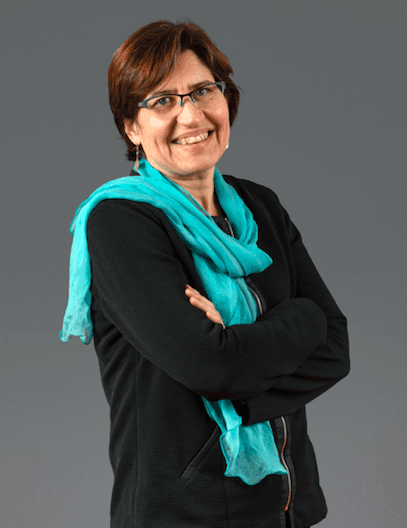
Valérie Masson-Delmotte's insights on future IPCC climate scenarios and what they mean for businesses
For several weeks now, debates surrounding the forthcoming new IPCC scenarios (CMIP7) and announcements suggesting a possible questioning of the worst-case scenario, SSP5-8.5, have fueled numerous questions among businesses, banks, insurers, and, more broadly, stakeholders involved in climate change adaptation.
For many organizations, SSP5-8.5 currently serves as the baseline scenario used to test asset robustness, build adaptation roadmaps, assess the costs of climate inaction, or conduct stress tests on critical infrastructure.
A debate causing concern among climate adaptation stakeholders
In this context, certain publications or statements suggesting that the SSP5-8.5 scenario might now be "abandoned" have created genuine operational unease. Climate, risk, and CSR managers now find themselves questioned internally by their executive management, at times left vulnerable regarding committed investments or the very relevance of the adaptation strategies developed in recent years.
This situation raises several fundamental questions: is the SSP5-8.5 scenario truly disappearing? Are analyses conducted on this basis becoming obsolete? Should adaptation strategies already underway be revised? Do high-warming scenarios remain scientifically relevant for managing physical climate risks?
To try to shed some light on this, I had the opportunity to speak with Valérie Masson-Delmotte, paleoclimatologist, research director at the CEA, and former co-chair of IPCC Working Group I on the physical science basis of climate change.
Her insights provide several essential elements for adaptation stakeholders.
Is SSP5-8.5 really disappearing?
The first point she emphasizes is that ongoing developments in CMIP7 should not be interpreted as the disappearance of high-warming scenarios. The future "high" scenario will remain extremely high in terms of radiative forcing and will reach levels comparable to SSP5-8.5, with an estimated time lag of about twenty years.
In other words, very high warming trajectories are not disappearing from the scientific landscape. This point is crucial, as it means that risk analyses based on severe assumptions retain all their relevance within a prudential, insurance, or extreme risk management approach.
In the short term, differences between scenarios remain limited
Valérie Masson-Delmotte then recalls another element that is often misunderstood in public debates: over the coming decades, differences between scenarios remain relatively limited. The gaps primarily become significant in the second half of the century.
In practice, this means that looking ahead to 2030–2050, even intermediate scenarios can lead to very high hazard levels. Adaptation strategies undertaken today do not suddenly become excessive or unjustified simply because a debate exists around SSP5-8.5.
The same scenario can produce multiple climate futures
She also points out an essential methodological factor: a climate scenario never produces a single warming trajectory. For the same emissions scenario, there is a range of possible climate model responses. Some models exhibit higher climate sensitivity than others. Thus, an intermediate scenario can indeed lead to high warming levels in a portion of the simulations.
She notably recalls that a scenario leading on average to around +2.8°C by the end of the century can still carry an approximately 20% probability of exceeding +3°C. In this context, exploring worlds at +3.5°C or +4°C remains entirely relevant within a framework of risk aversion or critical failure management.
Thinking in terms of warming levels rather than scenarios
This is likely where one of the most important takeaways of her analysis comes in: the need to reason more in terms of warming levels rather than scenarios themselves.
This approach, already widely used in the IPCC's Sixth Assessment Report (AR6), consists of directly studying the climate consequences associated with worlds at +1.5°C, +2°C, +3°C, or +4°C, rather than focusing debates on the political or economic plausibility of a given scenario.
This method offers several major advantages. It allows climate analyses to be better linked to operational adaptation challenges, avoids certain caricatures surrounding extreme scenarios, and above all enables the exploration of low-probability but potentially high-consequence outcomes.
The question is therefore not whether a trajectory is probable or not. It is about understanding what could happen if certain unfavorable conditions materialize.
High scenarios as climate stress-testing tools
Valérie Masson-Delmotte very clearly stresses this last point: from a risk management perspective, it would be irresponsible not to examine very unfavorable scenarios when dealing with critical infrastructure, human safety, business continuity, or systemic risks.
High scenarios remain indispensable for testing system limits, analyzing climate non-linearities, and avoiding the need to extrapolate beyond available simulations. They therefore play a role comparable to stress tests used in finance, insurance, or high-risk industries.
Regional signals already more intense than certain projections
Valérie Masson-Delmotte also brings up a particularly interesting point for practitioners on the ground: certain regional trends currently observed already appear to be evolving faster or more intensely than simulated by some climate models under intermediate scenarios.
She specifically points to extreme heat in Europe. Several factors may explain these discrepancies: specific atmospheric dynamics, regional effects, aerosol reductions, or certain limitations of global models.
This finding is particularly important for businesses that are already observing phenomena on the ground that sometimes seem "ahead" of certain climate projections. The exceptional heat episode observed in May 2026 is a striking illustration of this phenomenon.
In this context, using high scenarios can specifically allow for a better representation of certain regional climate realities already observed and more effectively inform impact and risk assessments.
No-regret adaptation, but testing extreme risks
Finally, Valérie Masson-Delmotte introduces an essential distinction between "no-regret" adaptation and extreme risk management. In her view, it is not necessary to systematically deploy extreme scenarios to justify all adaptation actions. Many so-called "no-regret" measures can perfectly well be initiated based on intermediate scenarios.
Conversely, when evaluating risks of major failure, critical infrastructure, insurance issues, or systemic consequences, exploring high scenarios remains indispensable.
This nuance is essential for every business. It means that current debates surrounding SSP5-8.5 should not lead to abandoning prudential approaches or extreme resilience analyses. Instead, they should encourage a more mature reading of climate projections, clearly distinguishing between use cases, time horizons, and risk tolerance levels.
What businesses should take away from IPCC developments
For companies, local authorities, banks, or insurers already engaged in adaptation, several lessons emerge clearly.
First, high-warming scenarios remain scientifically useful and relevant. Second, adaptation strategies already underway retain their full legitimacy. Organizations that have built their risk analyses, stress tests, or roadmaps on the basis of SSP5-8.5 have no reason to consider today that their efforts have become obsolete or excessive.
Quite the contrary, the points underscored by Valérie Masson-Delmotte confirm that it remains essential to explore high-warming outcomes when it comes to business continuity, safety, critical infrastructure, supply chains, or major failure risks.
Do not turn the scenario debate into an excuse for inaction
For the many organizations that have not yet taken any action regarding adaptation, current debates must not under any circumstances become an excuse for inaction or a wait-and-see attitude.
Recent climate observations, the intensification of extremes, and the growing challenges faced by insurers show, on the contrary, that businesses must now learn to manage their resilience in an increasingly unstable environment.
Striking a balance between protection, cost, and operational resilience
This does not mean, however, that all businesses must strive to protect themselves against the "worst of the worst" without economic or financial limits. No entity has infinite resources, and all systems have thresholds beyond which absolute protection becomes technically or economically impossible.
The real challenge therefore lies in making conscious, documented, and economically rational trade-offs. In other words, identifying acceptable risk levels, understanding the potential consequences of failures, and then investing proportionately in adaptation measures that offer the best balance among cost, protection, business continuity, and resilience.
A mature adaptation strategy is not one that claims to eliminate all risks. It is a strategy that understands possible worlds, assesses vulnerabilities, tests system boundaries, and deliberately decides how far it is relevant, cost-effective, and necessary to invest to protect people, assets, and the organization's operational capacity.
The real question: what happens in a +3°C or +4°C world?
Ultimately, the real question is not whether SSP5-8.5 should be retained or not. The real question is what happens to a business, an infrastructure asset, or a territory when confronted with a +3°C or +4°C world.
Decision-makers do not ask their risk teams to predict the future with certainty. They ask them to identify situations likely to jeopardize operations and prepare the organization to cope by investing judiciously in adaptation and business continuity actions.
Refocusing the debate on climate risk management
Finally, I would like to warmly thank Valérie Masson-Delmotte for the quality of this discussion and the clarity of her insights on a topic that has become particularly sensitive for economic actors facing climate change adaptation challenges, as well as for all organizations currently considering how to strengthen their resilience in the face of rapidly evolving risks.
In a context where debates around climate scenarios can quickly become caricatured or polarized, her explanations helpfully refocus the discussion on what matters most: understanding risks, exploring possible worlds, and helping decision-makers make informed, proportionate choices grounded in a rigorous interpretation of available scientific knowledge.
Dr. Jean-Louis Bertrand
President, Tardigrade AI
Vice-President of the GIEC des Pays de la Loire
Photo credit: https://mediatheques.paris-saclay.com/
About Tardigrade AI
Anticipate, measure, decide
Tardigrade AI helps businesses move from climate risk to decision-making: forecasting events that threaten their operations, quantifying their cost, and choosing the most cost-effective adaptation measures.
Protect
5-day operational alerts
Anticipate heat, cold, wind, rain, hail, or snow up to 5 days in advance. An alert is only sent if a critical threshold for your business, your sites, or your teams is about to be exceeded.
Short term
Horizon
Cost of inaction and adaptation plan
Quantify in euros the climate impact on each of your sites or across your portfolio, then identify the most cost-effective adaptation measures from a catalog of 62 quantified solutions.
Long term